
The RCM Operating Model of the Future: People, Process and Technology in Balance
The future of healthcare revenue cycle management depends on balancing skilled professionals, standardised workflows, and technology-enabled operations to improve accuracy, visibility, and accountability.
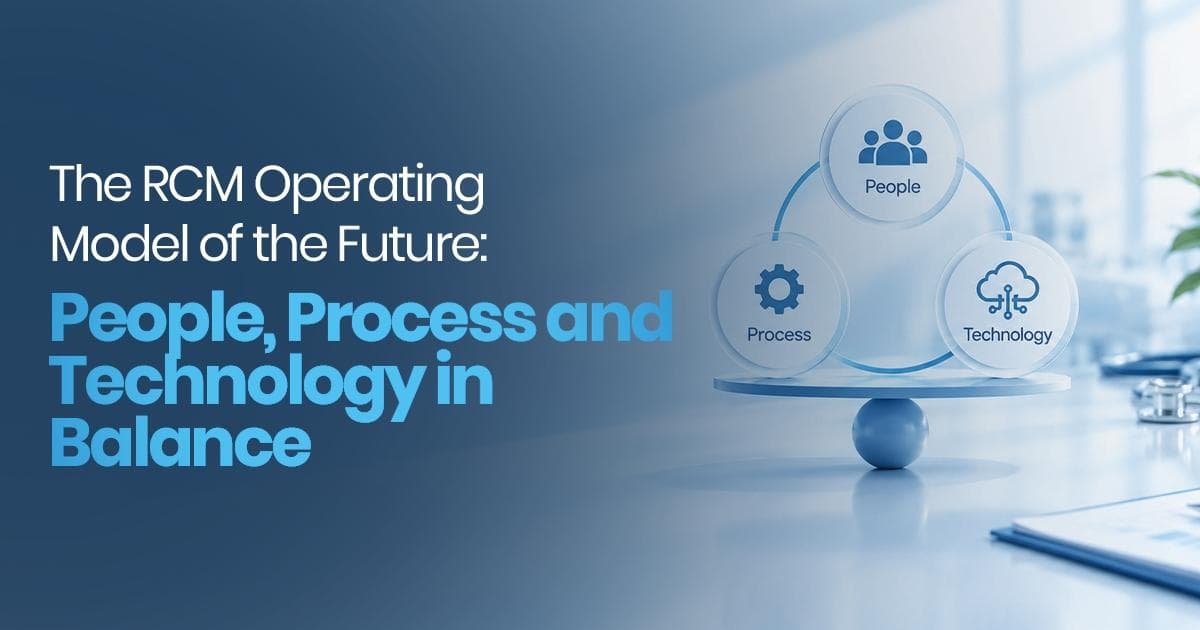
Healthcare revenue cycle management (RCM) is evolving beyond billing and claims processing. Healthcare organisations need to connect people, technology, and processes to improve financial performance, strengthen operational efficiency, and support better decision-making.
As claim requirements grow, workloads become more complex. An effective operating model can help hospital management coordinate activities and manage revenue cycles with greater accuracy, visibility, and accountability.
For healthcare providers, the future of RCM lies not in relying on a single solution, but in balancing skilled professionals, standardised workflows, and technology-enabled operations.
Why the Traditional RCM Model Needs to Evolve
Many hospitals continue to face challenges such as claim denials, delayed collections, incomplete information, outstanding accounts receivable, delayed follow-ups, and revenue leakage. These challenges can persist when organisations do not address the way their revenue-cycle operations work.
Problems can arise when the revenue cycle operates in silos, information is missing or incorrect, processes are inconsistent, or ownership and accountability are unclear. Identifying gaps early can help organisations reduce avoidable mistakes and improve coordination.
1. People: The Expertise Behind Every Revenue Cycle
Technology can automate tasks and reduce repetitive work, but experienced and skilled professionals remain essential to revenue-cycle operations. Medical billing, coding, claims processing, follow-ups, and denial management all require people who understand the work and can resolve exceptions.
An effective RCM team needs clearly defined roles and responsibilities. With appropriate training and access to the right information, team members can investigate the reasons behind denials, revenue gaps, and payment discrepancies.
Collaboration between RCM specialists and hospital departments is equally important. When billing teams work closely with clinical, administrative, and insurance-coordination teams, potential issues can be identified and addressed earlier.
2. Process: Creating Consistency and Accountability
A well-defined process provides the foundation for an efficient revenue cycle. Standard workflows can reduce delays, duplication, manual effort, and inconsistent outcomes.
A structured RCM process covers the complete revenue cycle, including patient registration, insurance eligibility verification, documentation review, medical billing and coding, claim submission, payment tracking, denial management, and accounts receivable follow-up.
Each stage should have clear ownership, defined timelines, and measurable performance indicators. Regular denial analysis can reveal recurring issues, while systematic follow-ups can prevent claims from remaining unresolved for extended periods.
Healthcare revenue-cycle optimisation also requires continuous improvement. Reviewing performance data and identifying root causes allows organisations to refine workflows instead of repeatedly addressing the same problems.
3. Technology: Enabling Visibility and Efficiency
Technology can support healthcare process automation through claim tracking, automated reminders and notifications, reporting, and identification of pending tasks.
Dashboards, analytical reports, and performance reports can improve visibility into denial rates, claim turnaround time, accounts receivable ageing, and collection performance. This helps hospitals make decisions based on data rather than relying only on manual updates.
Automation can reduce repetitive administrative work, allowing teams to spend more time on complex claims and exception handling.
Successful RCM technology implementation depends on selecting solutions that align with existing workflows, organisational requirements, and data-governance practices. Technology should strengthen the operating model, not introduce unnecessary complexity.
Bringing People, Process and Technology Together
Skilled professionals need consistent processes to perform effectively. Standardised workflows need technology to improve visibility and reduce repetitive tasks. Technology, in turn, needs informed professionals who can interpret information, resolve exceptions, and drive continuous improvement.
This integrated approach creates a more coordinated RCM environment, supporting accurate claims processing, timely follow-ups, better identification of revenue gaps, and stronger financial oversight.
Building the Future of Healthcare RCM
The future of revenue cycle management will be shaped by how effectively healthcare organisations combine expertise, operational discipline, and digital capabilities. Bringing people, technology, and processes together can help hospitals strengthen their revenue cycle.
At RCM Bharat, we believe a balanced approach to people, process, and technology can help hospitals strengthen revenue-cycle operations. With structured workflows and focused revenue-cycle management, RCM can become more than an administrative function: it can serve as a strategic contributor to organisational efficiency and sustainable growth.